





OCC Apparel
The history of garment decoration stretches back more than 34,000 years. Long before the printed T-shirt, embroidery machine or digital printer, people were already finding ways to add colour, pattern, identity and meaning to fabric.
What began with naturally coloured fibres and hand stitching has evolved into a global apparel-decoration industry using automatic screen-printing presses, computerised embroidery machines and sophisticated digital printing technology.
The equipment has changed enormously.
The purpose has not.
We still decorate clothing to communicate who we are, what we belong to and what we want to represent.
~34,000 BCE — The Earliest Evidence of Coloured Textile Fibres
One of the earliest known examples of humans altering textile fibres comes from Dzudzuana Cave in present-day Georgia, where archaeologists discovered ancient flax fibres dating back more than 34,000 years.
Some of the fibres had been coloured, providing remarkable evidence that early humans were already interested in changing the appearance of textile materials.
Today we might think of garment colour as completely normal, but tens of thousands of years ago this represented an important step: fabric and fibre were becoming more than purely functional materials.
They were becoming expressive.
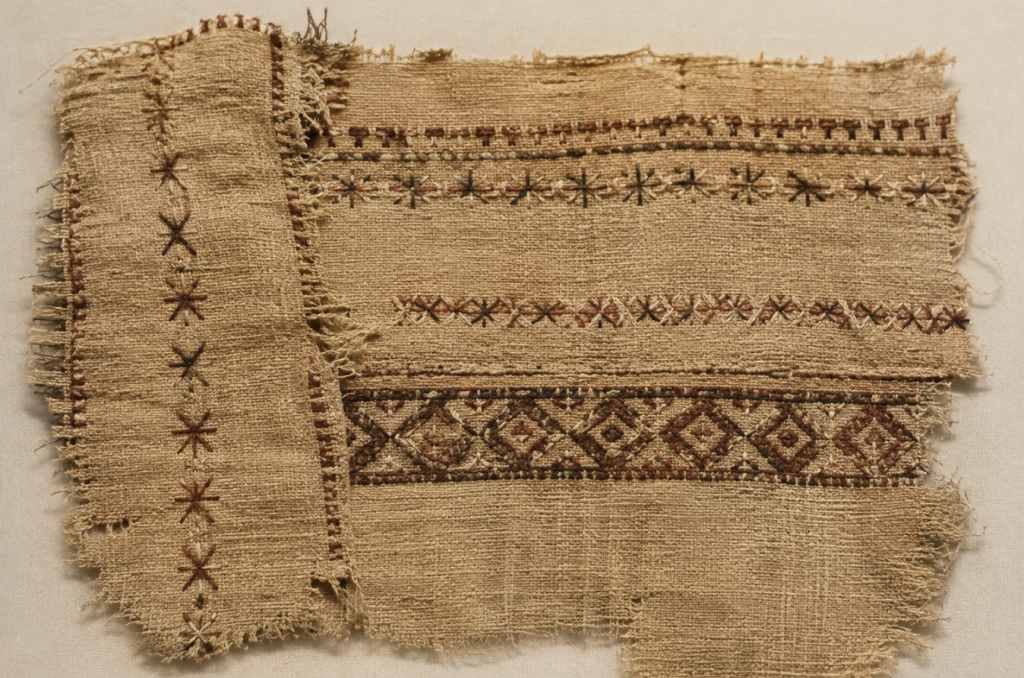
~5,000–3,000 BCE — Decorative Stitching and Early Embroidery
As textile making became more sophisticated, stitching began to serve a decorative purpose as well as a functional one.
Early traditions of embellished textiles developed across ancient cultures including Egypt, China and wider Asia.
This was the beginning of a decoration method that is still one of the most popular in the world today: embroidery.
What once required painstaking hand stitching can now be produced using digitised artwork and multi-head computerised embroidery machines capable of decorating many garments simultaneously.
The technique is ancient. The technology is modern.
~2,000 BCE — Resist Dyeing
Another important step in textile decoration was the development of resist dyeing.
Instead of simply colouring an entire piece of fabric, craftspeople began protecting selected areas from dye through methods involving binding, wax and other materials.
These techniques eventually developed into processes including batik, tie-dye and other forms of resist decoration.
The fundamental idea was significant: for the first time, colour could be intentionally controlled to create repeatable patterns and designs.
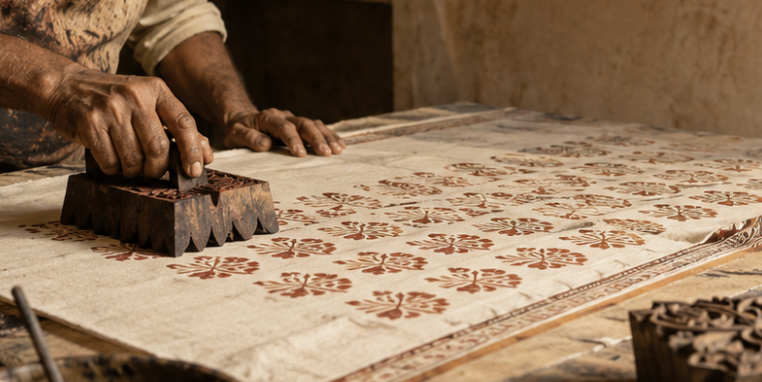
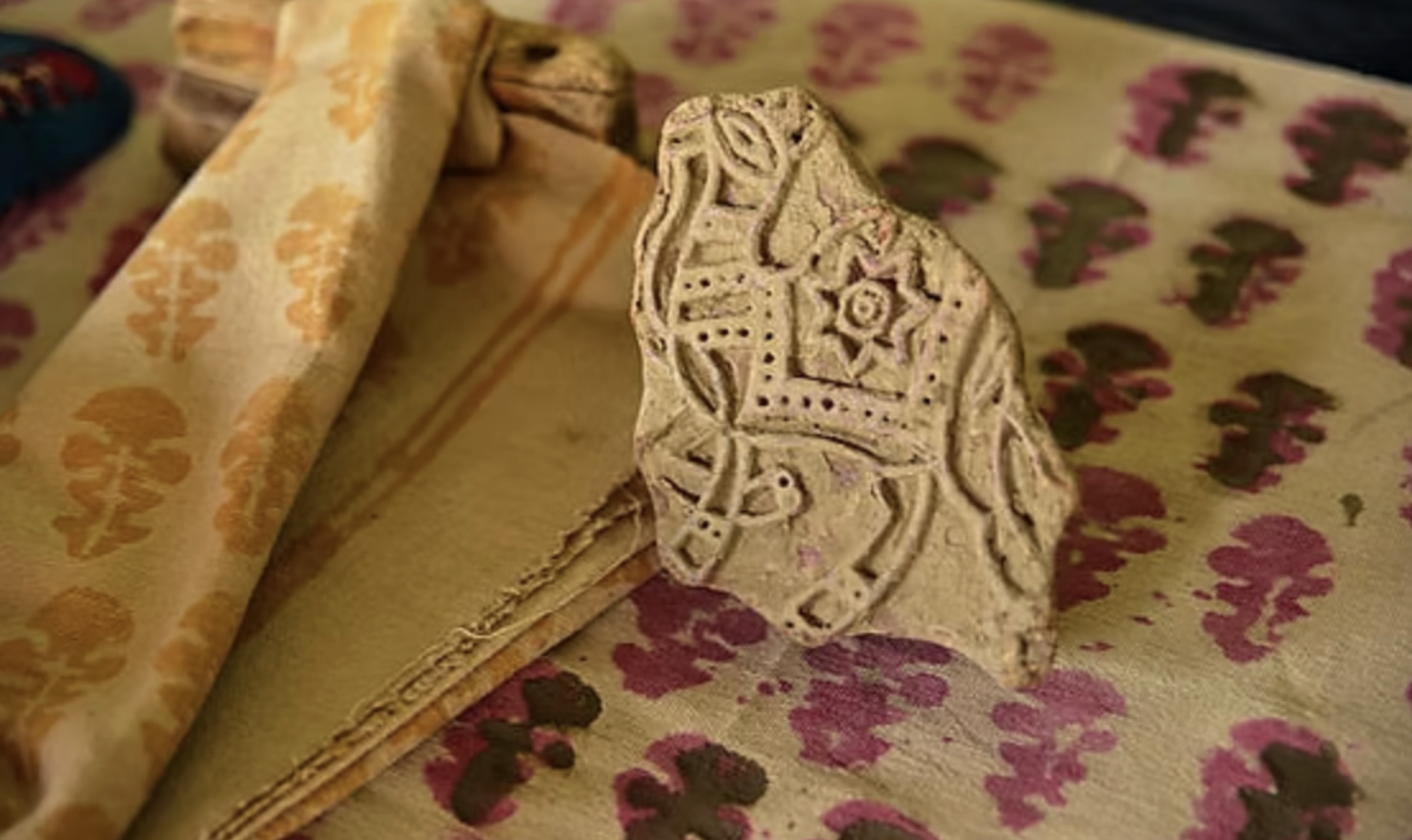
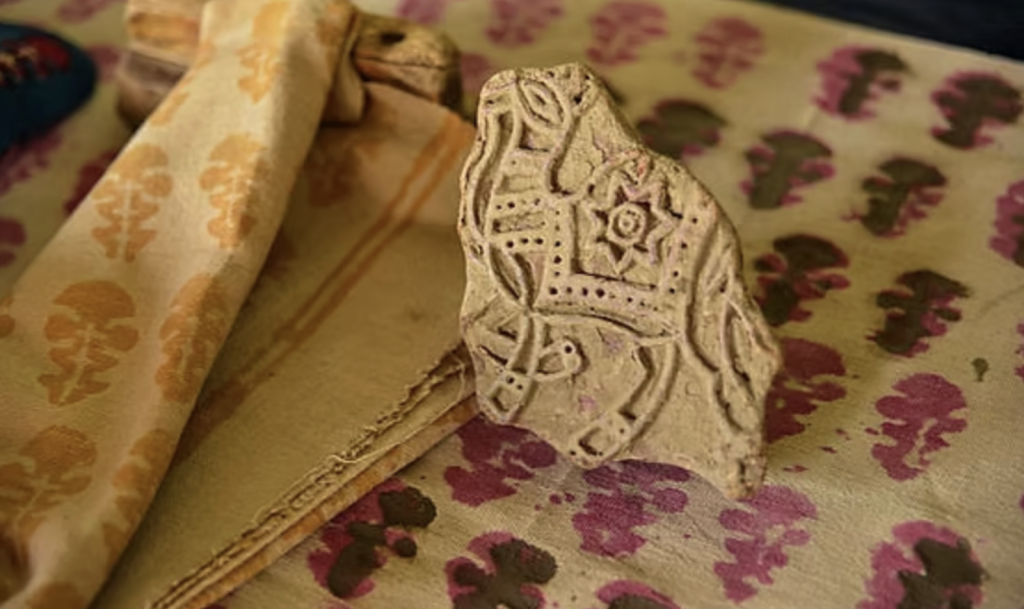
~500 BCE — Block Printing on Textiles
Carved wooden blocks represented another major leap forward.
Instead of decorating every section of fabric individually by hand, craftspeople could carve a pattern into a block, apply pigment or dye and repeatedly stamp the same design onto textile.
India and China became important centres for textile block printing, and traditional block-printing techniques remain in use today.
In many ways, block printing introduced one of the principles that would later define commercial garment decoration:
repeatability.
The ability to reproduce the same design again and again changed what was possible.
~500–1200 CE — Stencils and the Origins of Screen Printing
As textile decoration developed throughout Asia, craftspeople began using increasingly complex stencils to apply designs.
In China and Japan, techniques evolved in which fine materials and mesh-like structures helped support intricate stencil designs.
These methods are important technological ancestors of what we now recognise as screen printing.
The basic principle is familiar even today: certain areas allow ink to pass through while others block it, creating the image on the textile beneath.
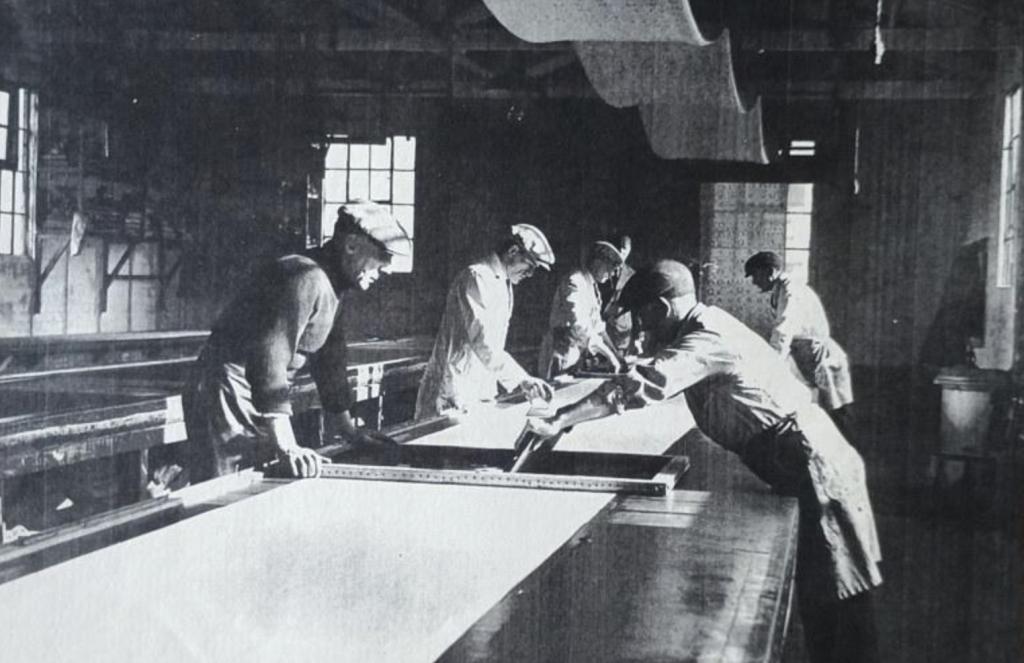
1907 — Modern Screen Printing Takes Shape
A major milestone arrived in 1907, when Samuel Simon patented a silk-screen printing process in England.
This helped establish the foundations of modern commercial screen printing.
During the following decades, the process continued to evolve.
By the 1910s and 1930s, light-sensitive emulsions and photographic stencil techniques enabled printers to reproduce increasingly detailed artwork onto screens.
Then, during the 1960s, screen printing became deeply connected with popular culture.
Music merchandise, surf brands, sporting clubs, universities, political movements and emerging fashion labels all embraced the printed T-shirt.
The humble tee became a canvas.
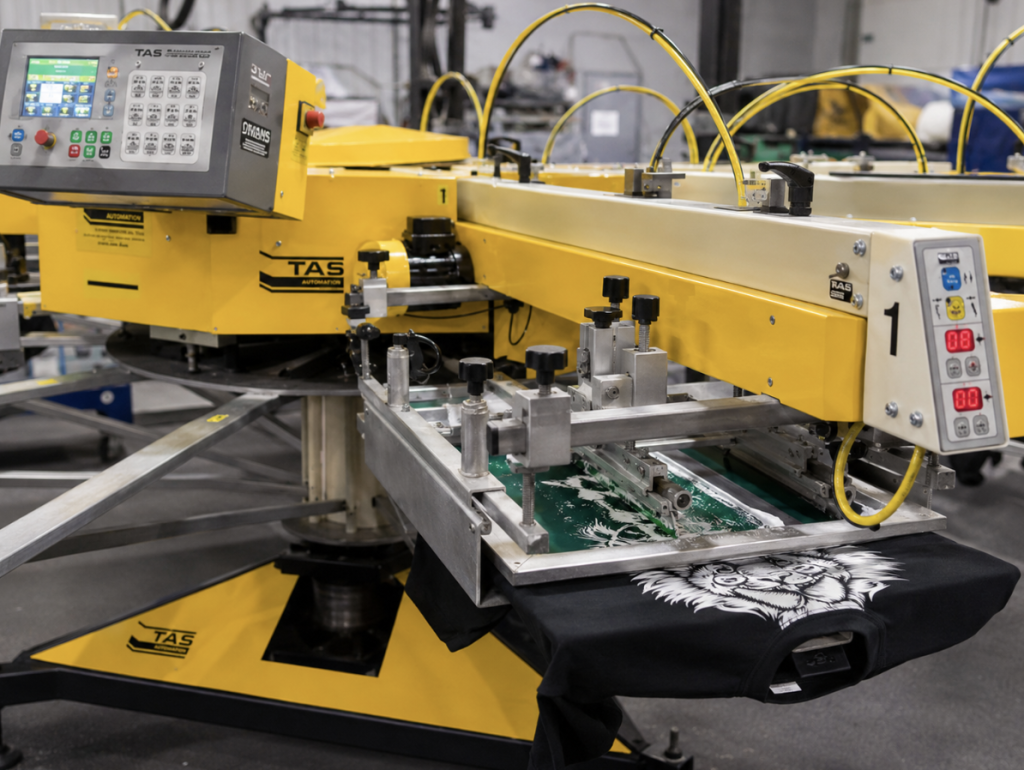
Modern Automatic Screen Printing
Screen printing remains one of the most important garment-decoration processes in the world.
But today’s equipment looks very different from the early silk-screen workshops of the 1900s.
Modern automatic presses, such as TAS automatic screen-printing machines, can operate multiple print stations around a carousel, applying different colours to garments at high production speeds.
A shirt can move through multiple print heads, flash-curing stations and colour applications before being removed and sent through a conveyor dryer.
For larger production runs, screen printing remains incredibly efficient.
It also offers something customers continue to value: strong colour, excellent durability and a distinctive printed finish.
1980s–1990s — Embroidery Enters the Digital Age
While embroidery has existed for thousands of years, computerisation completely transformed commercial embroidery.
Artwork could now be converted into digital stitch files, telling a machine exactly where, when and how each stitch should be applied.
Multi-head embroidery machines allowed multiple garments to be decorated simultaneously, turning one of the world’s oldest textile crafts into a scalable commercial production process.
Today, embroidery remains particularly popular for corporate apparel, uniforms, polos, jackets, caps and premium branded garments.
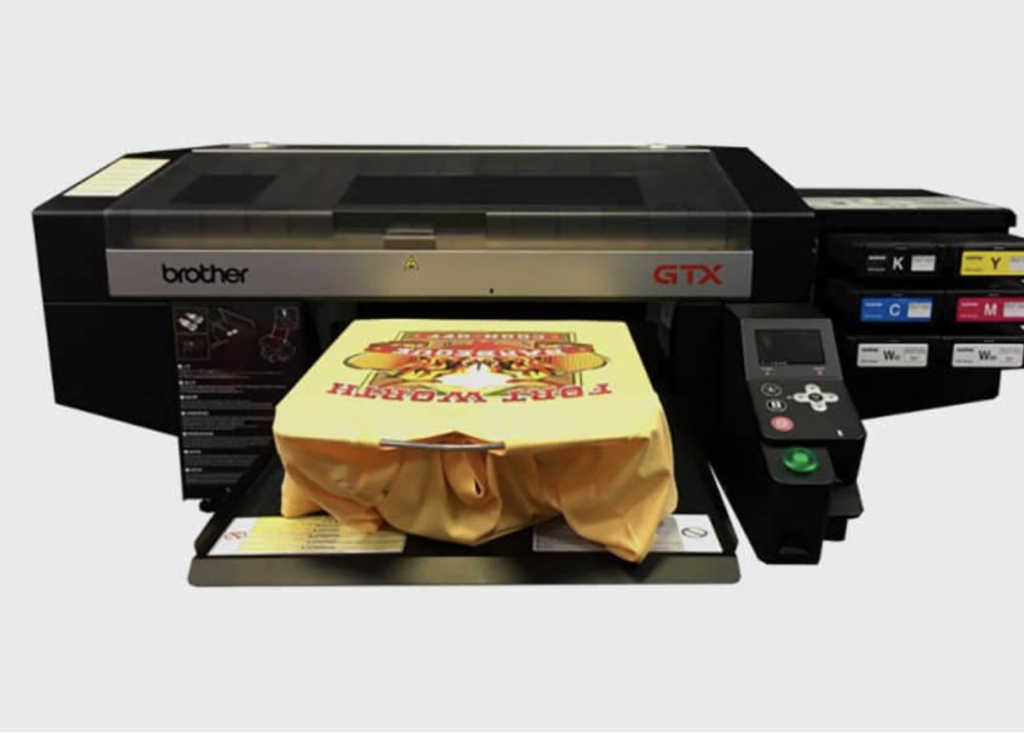
1996 — Direct-to-Garment Printing Arrives
The next major shift was digital.
In the mid-1990s, early commercial Direct-to-Garment printing, commonly known as DTG, emerged.
Instead of creating a separate screen for each colour, DTG technology allowed digital artwork to be printed directly onto the surface of a garment using inkjet technology.
Throughout the 2000s and 2010s, improvements in printheads, pretreatment systems and water-based pigment inks made DTG increasingly practical for commercial apparel production.
Modern machines, including printers from manufacturers such as Brother, can reproduce highly detailed, full-colour artwork directly onto garments.
DTG changed the economics of decoration, particularly for short runs and highly detailed designs.
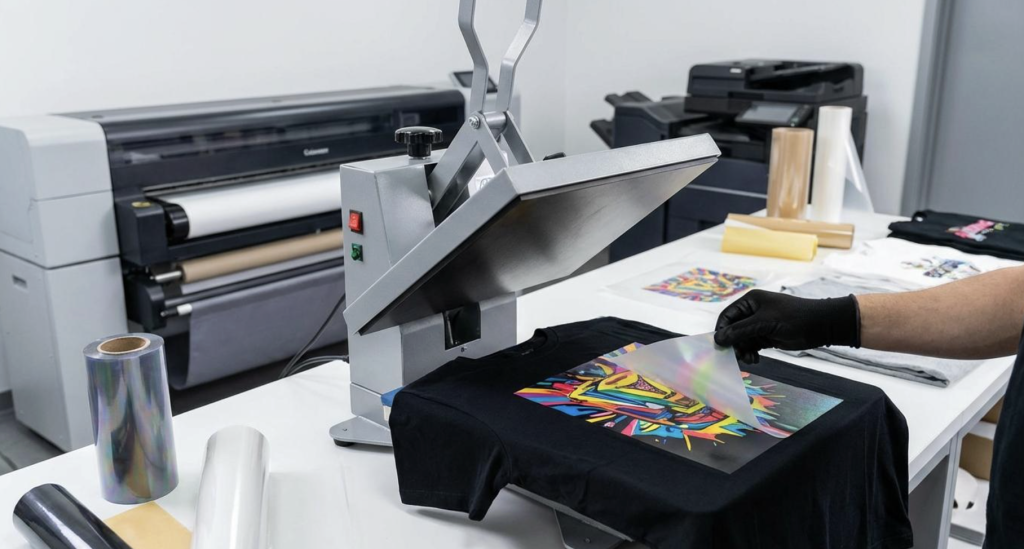
~2010s — Direct-to-Film Printing
Then came another major digital development: Direct-to-Film printing, or DTF.
With DTF, artwork is digitally printed onto a transfer film.
An adhesive powder is applied to the printed image, the transfer is cured, and the finished design is then heat-pressed onto the garment.
The process offers considerable flexibility because it can be used across a wide range of fabrics, garment types and colours.
From around 2020 onward, DTF adoption accelerated dramatically across the garment-decoration industry.
For small runs, complex artwork and applications where other methods may be less practical, DTF has become an increasingly important option.
34,000 Years of the Same Idea
The technology has changed dramatically.
The basic evolution looks something like this:
Natural Dye → Decorative Stitching → Resist Dye → Block Printing → Stencil → Screen Printing → Computerised Embroidery → DTG → DTF
What is perhaps most interesting is that every stage has been trying to solve essentially the same problem:
How do we turn a piece of clothing into something distinctive?
A company logo.
A university identity.
A tour T-shirt.
A campaign message.
A staff uniform.
A fashion graphic.
A piece of merchandise someone actually wants to wear.
That is why garment decoration continues to evolve.
Choosing the Right Garment Decoration Method
At OCC Apparel, there isn’t one decoration method that is automatically better than another.
The right process depends on the garment, artwork, quantity, fabric, colour, desired finish and budget.
Screen printing can be ideal for larger runs and strong colour reproduction.
Embroidery can create a premium, durable finish.
DTG can be excellent for detailed digital artwork and shorter production quantities.
DTF can provide flexibility across a broad range of garments and applications.
The important part is matching the decoration method to the job.
After more than 34,000 years of textile innovation, that remains the goal:
great artwork, applied to the right garment, using the right process.
At OCC Apparel, we work across screen printing, embroidery, DTG, DTF and specialist garment-decoration techniques to help customers achieve the best possible result for their apparel.
Need help choosing the right decoration method for your next project? Contact the OCC Apparel team and we can recommend the best process for your artwork, garments and order quantity.
References
Kvavadze, E. et al. (2009). 30,000-Year-Old Wild Flax Fibers. Science, 325.
PubMed: https://pubmed.ncbi.nlm.nih.gov/19745144/
Sheffield Museums. Painted Fabrics Ltd Collection, Sheffield, England. https://www.sheffieldmuseums.org.uk.
The Metropolitan Museum of Art. Kappazuri and the Origins of Japanese Stencil Dyeing. New York: https://www.metmuseum.org